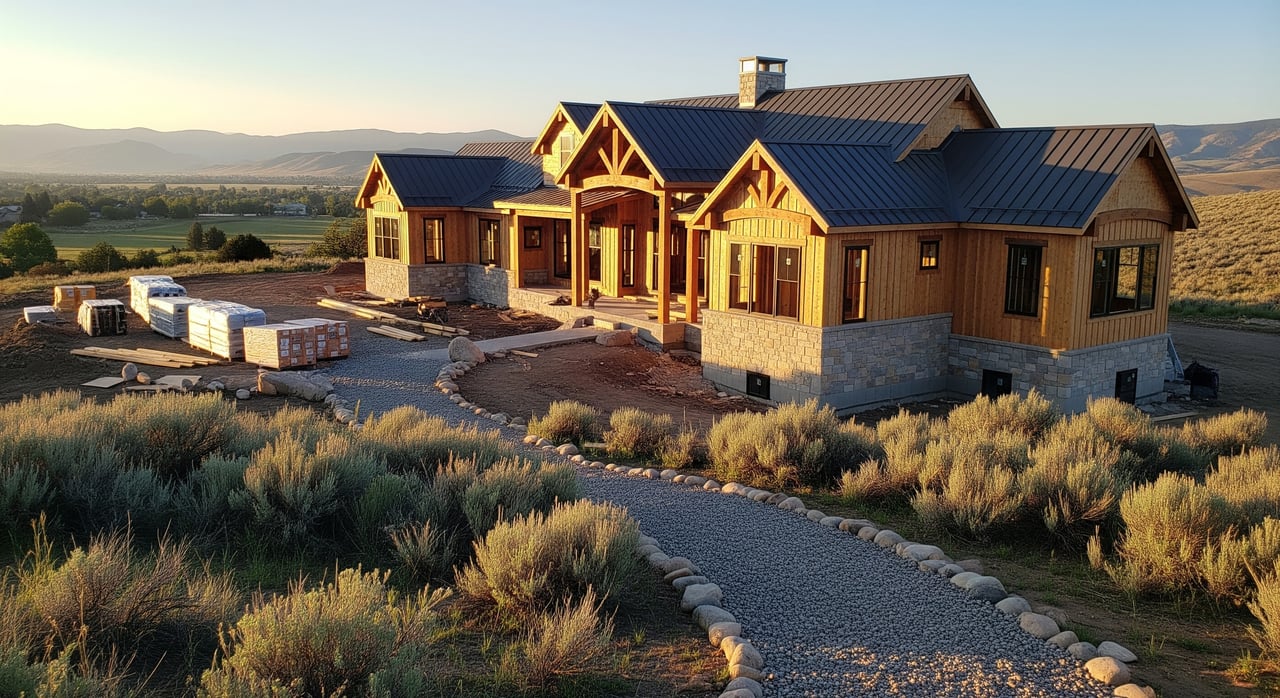
Thinking about building a new home in Santaquin but unsure how long it will take and what it will cost? You are not alone. Between permits, impact fees, HOAs, and construction loans, there are many moving parts to plan. In this guide, you will learn realistic timelines, the types of fees to expect, key HOA considerations, and how construction loans work in Utah County so you can budget and move forward with confidence. Let’s dive in.
Build timeline in Santaquin
Production vs. custom timing
- Production home on a ready lot: Plan on about 4 to 6 months from permit to certificate of occupancy, and roughly 5 to 9 months from contract to move-in depending on options and lot readiness.
- Semi-custom or custom on a raw lot: Commonly 9 to 14 months or longer from contract to move-in, especially with heavy design changes or complex site work.
Phase-by-phase overview
- Lot and design selection: 1 to 6 weeks for a production model on a platted lot, or 6 to 16 weeks for custom design, engineering, and HOA architectural review.
- Permitting and pre-construction: About 2 to 6 weeks for a simple production home, or 4 to 12 weeks for custom builds that need engineering and utility coordination.
- Site work and foundation: Utilities tie-in, grading, and foundation usually take 4 to 10 weeks total depending on complexity.
- Framing and exterior shell: Framing, roof, windows, and doors often take 3 to 6 weeks, followed by 2 to 4 weeks for HVAC, plumbing, electrical, and insulation.
- Interior finishes: Drywall and paint typically 2 to 4 weeks; trim, cabinetry, flooring, and appliances often 3 to 6 weeks.
- Final inspections and occupancy: Expect 1 to 3 weeks for inspections and punchlist items. Landscaping and hardscape may be scheduled by the developer and can take 1 to 4 weeks.
Local timing factors
- Weather: Winter freeze can slow concrete work, exterior finishes, and site work. Build in seasonal buffer time.
- Lot infrastructure: New phases needing road or utility extensions can delay permits and your start date.
- Builder and materials: Builder backlogs and supply chain items like windows, cabinets, or HVAC equipment can shift schedules.
Practical planning tips
- Add time contingency: Plan for at least a 10 to 20 percent cushion beyond the builder’s estimate.
- Plan housing: Decide whether you will stay in your current home, arrange interim housing, or line up a lease-back.
- Coordinate key dates: Align with the school calendar, job changes, and your lender’s timing for conversion to permanent financing.
Costs, fees, and permits in Santaquin
What fees to expect
- Lot purchase price: Market driven, with possible premiums for views, corners, or hillside locations.
- Impact fees: Common categories include culinary water, sewer, pressurized irrigation where applicable, transportation or road, parks and recreation or trails, and sometimes fire or public safety and storm drainage.
- Utility connection and tap fees: Water meter or tap, sewer tap, pressurized irrigation tap if applicable, and storm drain connections. Fees differ for new taps versus existing hookups.
- Permit and plan review fees: Building permit, plan check, civil engineering review, grading, and erosion control.
- Engineering and improvement guarantees: Some projects require bonds or escrowed funds to secure off-site improvements.
- HOA or developer assessments: Some developers front infrastructure then assess later, or roll costs into lot pricing. Review plat notes and CC&Rs.
- Utility deposits and meter setting: Meter setting costs, deposits, and first billing prorations may apply.
When fees are due
- Impact fees: Often due at building permit issuance or at platting or lot recording, depending on local rules and developer agreements.
- Connection or tap fees: Usually due before meter setting or service activation.
- Permit and review fees: Typically due at application or permit issuance.
Where to confirm exact amounts
- Santaquin City Building, Engineering, and Planning departments provide current fee schedules and process details.
- Utility providers can confirm tap and meter fees for culinary water, sewer, and pressurized irrigation.
- Title companies and the county recorder can identify recorded assessments or developer agreements tied to a lot.
- Local builders and civil engineers with recent Santaquin projects can offer practical, recent-dollar guidance.
Budget cushion for fees
- Set aside a specific contingency for municipal and connection costs, commonly 5 to 10 percent of the construction budget, since many fees are charged late in the process.
HOA rules and approvals
Developer control and design review
- New subdivisions often start with a developer-controlled HOA to manage infrastructure and standards. Control transitions to owners based on time or a percentage of lots sold.
- CC&Rs, bylaws, and design guidelines govern exterior materials, elevations, colors, fencing, landscaping, RV parking, and short-term rental policies.
- Most new builds require Architectural Review Board approval before you submit for a building permit. Ask about submission timelines and whether your builder’s plans are pre-approved.
Dues, reserves, and assessments
- Dues fund common areas, amenities, and sometimes private roads. Amounts vary by amenity level and are paid monthly or annually.
- Early-stage HOAs may have limited reserves, which can increase the risk of special assessments for capital items.
Documents to review before you buy
- Request the recorded CC&Rs, bylaws, budget, any reserve study, recent meeting minutes, and the developer’s transition plan.
- Confirm any restrictions that affect daily life, such as parking rules, exterior materials, or holiday displays.
Construction loans in Utah County
Common loan types
- Construction-to-permanent, also called one-time close: Funds the build through draws, then converts to a permanent mortgage without a second closing.
- Standalone construction, also called two-time close: Interest-only during the build, then you close a separate permanent mortgage at completion.
- FHA, VA, and agency programs: Availability varies by lender and borrower eligibility.
- Builder-financed options: Some production builders offer in-house or preferred lender programs that can streamline the process.
How draws and inspections work
- Lenders release funds in draws tied to milestones like foundation, framing, drywall, and finishes.
- Each draw typically requires an inspection or field review to confirm progress before disbursement.
Typical requirements and costs
- Equity or down payment: Conventional construction loans often require total equity of around 20 percent, which may include lot value. Exact requirements vary by lender and program.
- Appraisal and budget: Lenders review your builder contract and a cost breakdown, then order an appraisal based on the completed home.
- Interest during construction: You usually pay interest only on the funds disbursed. Some lenders include an interest reserve in the loan.
- Contingency reserve: Expect a 5 to 10 percent construction contingency to cover overruns.
Local practicalities
- Many Utah County lenders and credit unions have established construction products with predictable draw schedules and local inspectors.
- Title must be clear for lender lien priority, and builders need general liability and builder’s risk insurance.
Step-by-step plan to build in Santaquin
- Set your budget and financing plan
- Meet with a local construction lender to compare one-time close versus two-time close options.
- Identify down payment or lot equity, interest reserves, and required contingency funds.
- Choose your lot and builder
- Compare production versus custom approaches and plan selection timelines.
- Confirm whether the lot is platted and ready for permit or if off-site work is still underway.
- Verify city and utility fees
- Contact Santaquin City departments and utility providers for current impact, permit, and tap fees.
- Ask your title officer to check for recorded assessments or developer reimbursements.
- Complete design and approvals
- Submit plans to the HOA Architectural Review Board if required, then to the city for building and engineering review.
- Clarify expected review timelines and any resubmittal steps.
- Break ground and manage draws
- Track each phase, from site work to finishes, against your draw schedule.
- Confirm inspections and documentation early to keep funds flowing on time.
- Plan for delays and decisions
- Order long-lead items early, such as windows and cabinets.
- Keep a running list of selections and change orders to avoid late-stage slowdowns.
- Final inspections and closeout
- Walk the home with your builder for punchlist items and schedule final city inspections.
- Coordinate conversion to permanent financing and confirm HOA dues and utilities before move-in.
Common mistakes to avoid
- Underestimating fees: Impact and connection fees can be significant and are often due at permit issuance or later. Build a dedicated reserve.
- Skipping HOA review: CC&Rs and design rules affect everyday life and your build timeline. Read them before you commit.
- Tight timelines: Weather, materials, and inspections can shift schedules. Keep a 10 to 20 percent time buffer.
- No interim housing plan: Decide early whether you will sell first, rent, or carry two homes for a period.
- Ignoring seasonality: Winter can slow exterior work in Santaquin. Sequence concrete and exterior trades accordingly.
- Vague allowances: Nail down finish allowances and lead times to avoid costly change orders.
Ready to build with support?
Building new in Santaquin can be smooth when you have a clear plan, accurate fee estimates, and the right team. If you want help coordinating timelines, verifying city and HOA requirements, and connecting with trusted local lenders and builders, reach out to Florencia Barrera. You will get attentive, bilingual guidance tailored to your family’s goals. ¿Prefieres en español? Con gusto te ayudo.
FAQs
How long does a new build in Santaquin usually take?
- Production homes on ready lots often take 5 to 9 months from contract to move-in, while semi-custom or custom builds commonly run 9 to 14 months or longer.
What impact and connection fees should I plan for in Santaquin?
- Expect municipal impact fees for water, sewer, transportation, and parks, plus utility connection or tap fees for water, sewer, and pressurized irrigation where applicable, with exact amounts set by Santaquin City and utilities.
When are impact fees paid during the process?
- Impact fees are often due at building permit issuance or at platting or lot recording, and connection fees are usually due before meter set or service activation.
Do Santaquin subdivisions usually have HOAs, and what do they cover?
- Many new subdivisions form HOAs that manage design standards and maintain common areas and amenities, with dues that vary by community and possible special assessments.
How do construction loan draws work in Utah County?
- Lenders disburse funds in stages tied to milestones such as foundation and framing, and each draw typically requires an inspection before funds are released.
Should I sell my current home before my new build is finished?
- It depends on finances and lender requirements, and many move-up buyers either stay put until closing, arrange interim housing, or time a sale to reduce carrying two mortgages.